

MONEY TALKS
Parting ways with Luke Fickell this season could cost Wisconsin over $27 million
SPORTS. B1
MONEY TALKS
Parting ways with Luke Fickell this season could cost Wisconsin over $27 million
SPORTS. B1
MONEY TALKS
Parting ways with Luke Fickell this season could cost Wisconsin over $27 million
SPORTS. B1
MONEY TALKS
Parting ways with Luke Fickell this season could cost Wisconsin over $27 million
SPORTS. B1
Gov. Tony Evers is moving ahead with plans to revitalize the state’s prison system, including closing or renovating multiple aging facilities, absent any alternative plans from Republicans who have pledged their own reforms.
In a statement Tuesday, Evers called on Republicans on the State Building Commission to release $15 million set aside by the Legislature to allow the Department of Corrections to implement his plan, which he said would avoid costly delays for taxpayers.
“Wisconsin is already years behind in modernizing corrections and reforming our justice system like so many red and blue states have, so it’s critically important that we begin work on projects to modernize DOC facilities without any further delay,” Evers said. “If we want to save taxpayers millions, improve public safety, support our corrections staff and make our facilities safer, this is the plan to do it, and we need these investments to be released so we can get to work.”
The Building Commission is set to meet at the end of October.
Evers’ $535 million prison reform plan, announced in February, would renovate several aging facilities, such as the Waupun Correctional Center and the state’s two youth prisons in Irma, Lincoln Hills and Copper Lake; demolish the 1890s-era Green Bay Correctional Institution; and reduce the overall prison population by expanding the number of inmates who would qualify for the state’s earned-release program.

The statute of limitations allow killers in Wisconsin to evade full accountability by not cooperating with police on the whereabouts of their …
Youth inmates will continue to be relocated from the two prisons near Wausau to smaller, regional centers closer to home. A youth prison in Milwaukee County is expected to open in late 2026, and planning is underway for another regional youth center at the Oregon Correctional complex in Fitchburg.
Sen. Andre Jacque, R-New Franken, whose district is near the Green Bay prison, said he’s glad to see conversations happen about the prisons after years of urging Evers’ administration to develop plans. But he stopped short of committing support because he wants to see the details first.
“I’m pleased that we’re not waiting too long after the budget for him to bring something forward,” Jacque said. “I want to make sure that we have the flexibility as conversations continue, that we are not drawing up plans for items that are not going to be part of the conversation.”
Republican leaders said earlier this year they would draft their own plans for reforming the state’s prison system after voicing concerns that Evers had crafted his plan without any input from Republican lawmakers. Assembly Speaker Rep. Robin Vos, R-Rochester, said last February he was willing to spend up to $2 billion to revamp the prison system, including demolishing the Green Bay prison.

"These types of capital projects don't happen in two years and they won't in this case either," but the prison will be torn down, Born said.
The state budget, which was largely crafted by Republicans, requires the Green Bay prison to close by 2029. Other aspects of any state prison reforms would be decided in future budgets, Republican leaders on the Legislature’s budget committee said in July. Democrats decried the provision, which they said doesn’t specify how the prison would be wound down.
Wisconsin’s prison system has the capacity to house roughly 17,600 people, but as of Oct. 10, the state’s current prison population was about 23,500.
Many of the state’s prisons have faced headwinds or have been troubled for years. The Green Bay prison’s aging infrastructure has made it unsafe for both inmates and correctional staff. The Department of Corrections has struggled to recruit and retain staff, multiple inmate deaths have occurred in recent years, prolonged lockdowns have been instituted, and the youth prisons only met their court-mandated improvement plans for the first time last month since child abuse allegations surfaced a decade ago.

Monitors found no youth inmates were confined to their rooms for more than three days and they were getting sufficient time outside of their cells.
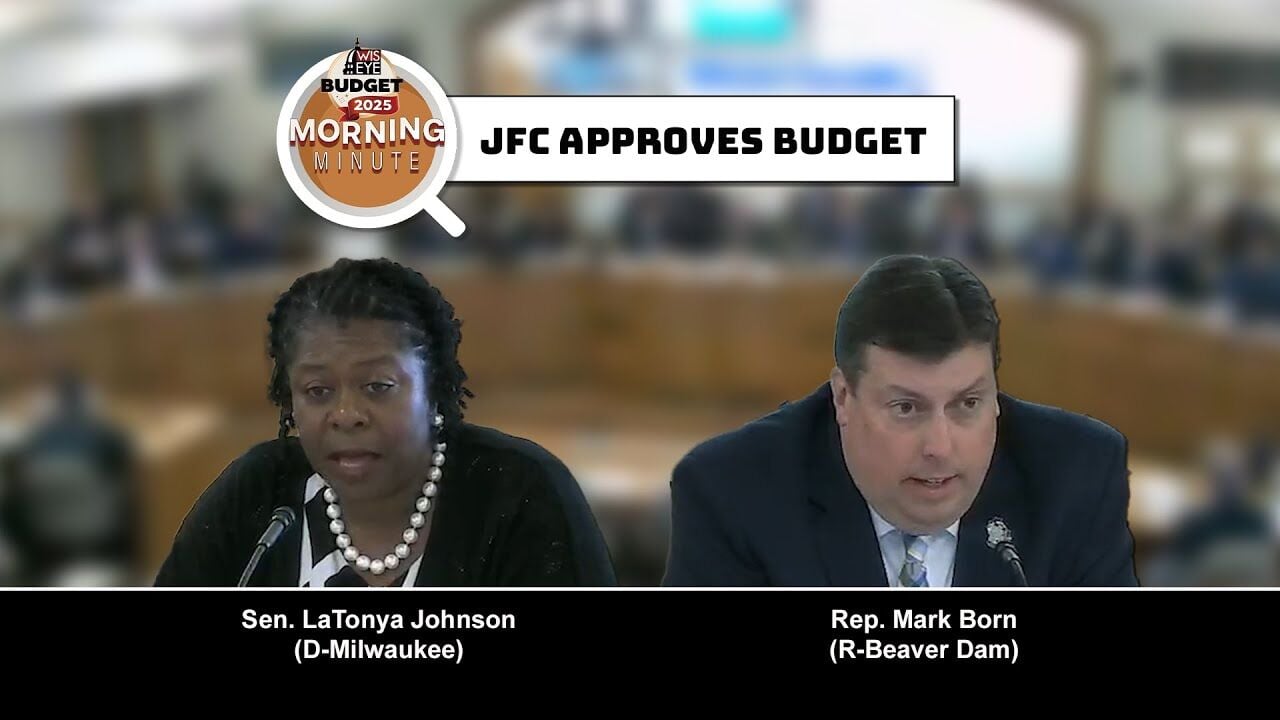
The Joint Finance Committee completed its work on an $111.1 billion budget by approving a package that includes $1.4 billion in new state mone…
WASHINGTON — The Supreme Court on Wednesday appeared ready to gut a key tool of the Voting Rights Act that helped root out racial discrimination in voting for more than a half century, a change that would boost Republican electoral prospects, particularly across the South.
During 2½ hours of arguments, the court’s six conservative justices seemed inclined to effectively strike down a Black majority congressional district in Louisiana because it relied too heavily on race.
Such an outcome would mark a fundamental change in the 1965 voting rights law, the centerpiece legislation of the Civil Rights Movement that succeeded in opening the ballot box to Black Americans and reducing persistent discrimination in voting.
A ruling for Louisiana could open the door for legislatures to redraw congressional maps in southern states, helping Republican electoral prospects by eliminating majority Black and Latino districts that tend to favor Democrats.
Legislatures already are free to draw extremely partisan districts, subject only to review by state courts, because of a 2019 Supreme Court decision.
Just two years ago, the court, by a 5-4 vote, affirmed a ruling that found a likely violation of Section 2 of the Voting Rights Act in a similar case over Alabama’s political boundaries. Chief Justice John Roberts and Justice Brett Kavanaugh joined their three more liberal colleagues in the outcome.
Roberts and Kavanaugh struck a different tone Wednesday, especially in their questions to civil rights lawyer Janai Nelson.
The chief justice suggested the Alabama decision was tightly focused on its facts and should not be read to require a similar outcome in Louisiana.
Kavanaugh pressed Nelson on whether the time has come to end the use of race-based districts under the Voting Rights Act, rather than “allowing it to extend forever.”
The court’s liberal justices focused on the history of the Voting Rights Act in combating discrimination. Getting to the remedy of redrawing districts only happens if, as Justice Elena Kagan said, a court finds “a specific identified, proved violation of law.”
A mid-decade battle over congressional redistricting already is playing out across the nation after Republican President Donald Trump began urging Texas and other GOP-controlled states to redraw their lines to make it easier for the GOP to hold its narrow majority in the House.
The court’s conservative majority is skeptical of considerations of race, most recently ending affirmative action in college admissions. Twelve years ago, the court bludgeoned another pillar of the landmark voting law that required states with a history of racial discrimination to get advance approval from the Justice Department or federal judges before making election-related changes.
The court separately gave state legislatures wide berth to gerrymander for political purposes. If the Supreme Court weakens or strikes down the Voting Rights Act’s Section 2, states would not be bound by any limits in how they draw electoral districts. Such a result would be expected to lead to extreme gerrymandering by whichever party is in power at the state level.
The court’s Alabama decision in 2023 led to new districts there and in Louisiana that sent two more Black Democrats to Congress.
Now, though, the court asked the parties to answer a fundamental question: “Whether the state’s intentional creation of a second majority-minority congressional district violates the Fourteenth or Fifteenth Amendments to the U.S. Constitution.”
Louisiana and the Trump administration joined with a group of white voters in arguing to invalidate the challenged district and make it much harder to claim discrimination in redistricting.
The arguments led Justice Sonia Sotomayor to assert that the administration’s “bottom line is just get rid of Section 2.”
Justice Department lawyer Hashim Mooppan disagreed and said state lawmakers would have no incentive to get rid of every majority Black district because doing so would create swing districts and imperil some Republican incumbents.
In addition, Mooppan said, only 15 of the 60 Black members of the House represent majority Black districts. “But even if you eliminated Section 2 entirely, fully 75% of the Black congressmen in this country are in districts that are not protected by Section 2.”
In the first arguments in the Louisiana case in March, Roberts sounded skeptical of the second majority Black district, which last year elected Democratic Rep. Cleo Fields. Roberts described the district as a “snake” that stretches more than 200 miles to link parts of the Shreveport, Alexandria, Lafayette and Baton Rouge areas.
The court fight over Louisiana’s congressional districts has lasted three years.
The state’s Republican-dominated legislature drew a new congressional map in 2022 to account for population shifts reflected in the 2020 census. But the changes effectively maintained the status quo of five Republican-leaning majority white districts
and one Democratic-leaning majority Black
district.
UW-Madison is set to become a national hub of Puerto Rican studies with the launch of a new center led by a professor duo.
It’s because of the vision of professors Aurora Santiago Ortiz and Jorell Meléndez-Badillo, who secured a $3 million grant from the Andrew W. Mellon Foundation that over the next three years will bring research scholars, musical artists, culinary and film events and expert speakers related to Puerto Rican studies to the university.
“We want to dedicate the rest of our careers to expanding the field of Puerto Rican studies, which is a relatively young field of study in comparison to other disciplines,” said Hub co-director Meléndez-Badillo, an associate professor of Latin American and Caribbean history. “It’s only half a century old and it stems out of a particular historical moment in this country.
And so, we want to honor that legacy.”
The Puerto Rican Studies Hub, currently housed in the UW-Madison History Department, is the first of its kind in the Midwest.
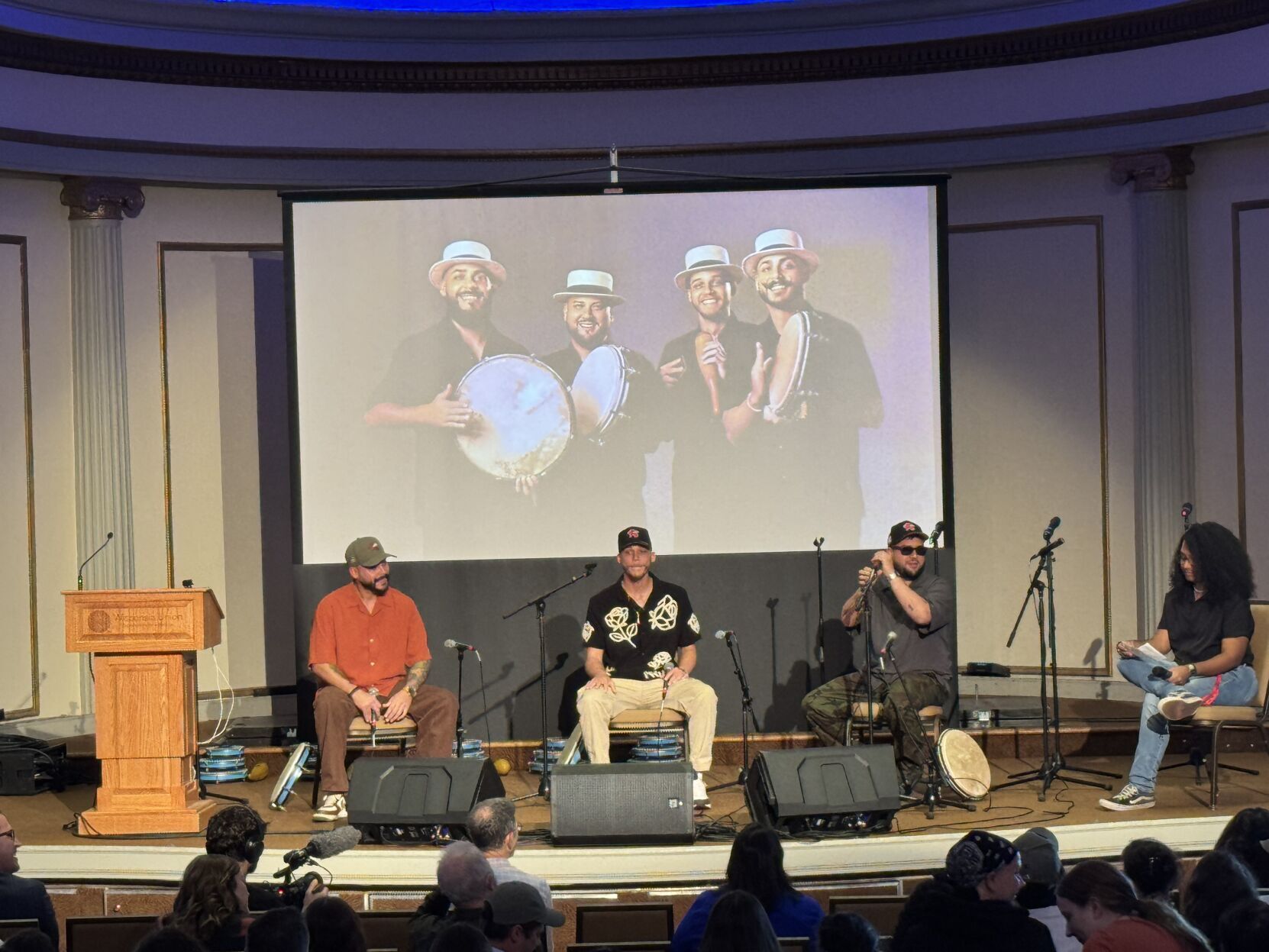
The university kicked off its programming Monday with a performance from Los Pleneros de La Cresta, a Puerto Rican percussion ensemble that was featured on artist Bad Bunny’s most recent album on the songs “Café con Ron” and “Baile Inolvidable.”
Meléndez-Badillo
Santiago Ortiz said she approached the ensemble with the idea of performing at UW-Madison at a conference.
“They were incredibly receptive and enthusiastic,” Santiago Ortiz said. “And they were wonderful collaborators. I think they really liked coming to UW-Madison and would love to come back in the future. I think they saw the love from the people in attendance.”
Meléndez-Badillo said the fact that the ensemble’s performance on campus was the only event it had outside of Puerto Rico for the month marks the significance of the hub in the Midwest.
“The field itself is interested in conversations that go beyond Puerto Rico and Puerto Rican communities,” Meléndez-Badillo said. “We see this hub as a way of serving multiple communities.”
Los Pleneros de La Cresta, a Puerto Rican percussion ensemble, performed Oct. 13 on UW-Madison’s campus at a Puerto Rican Studies Hub event.
The Hub, with the grant dollars, will connect UW-Madison faculty and students with scholars from Puerto Rico or other universities studying the field.
A symposium this spring will bring almost two dozen Puerto Rican studies scholars to the campus, said Hub co-director Santiago Ortiz, who is a UW-Madison assistant professor of gender and women’s studies and Chicanx/e and Latinx/e studies.

The UW-Madison professor collaborated with Bad Bunny again during his last stint of shows in Puerto Rico.
Two postdoctoral fellows will also be at UW-Madison for a two-year term under the grant and teach a Puerto Rican studies course.
“I think that students are really just wanting to learn about different histories and different perspectives,” Santiago Ortiz said.
Santiago Ortiz
The Hub will also sponsor a mentorship program where Puerto Rican studies scholars can workshop their work with a more senior professor from another institution at UW-Madison and present their findings to the campus community.
UW-Madison students will also benefit from study abroad opportunities to Puerto Rico through the Hub.
The Hub’s first event is a speaker series starting Oct. 28 with Francisco Scarano, a former UW-Madison history professor who taught about the Caribbean and Latin America, delivering the first lecture.
“We’re trying to create this space where, by bringing scholars, there might be something that is relevant to these processes and these experiences that studies maybe the Appalachia or that can understand migratory patterns of folks coming into the U.S. or other parts of the world,” Santiago Ortiz said.

Bad Bunny is set to headline the 2026 Super Bowl halftime show, which is set to take place at Levi’s Stadium in Santa Clara, California, on Fe…