Every day, about 48,000 vehicles travel along John Nolen Drive. There’s no telling how many drivers of those vehicles have noticed the electronic signs warning of impending road work. But it’s a safe bet that, starting Monday, a lot of them are in for a rude surprise.
The portion of John Nolen Drive that crosses Lake Monona will be reduced from two lanes in each direction to one so the deteriorating causeway can be reconstructed. The closures are scheduled run through the summer of 2027.
Do you have an alternate route planned during John Nolen construction?
The roughly $42 million reconstruction extends from South Broom Street to East Lakeside Street. It involves replacing six bridges, building three new bridges, expanding bike and pedestrian paths, making improvements to the Lake Monona shoreline, planting all new trees and reworking the South Broom Street and North Shore Drive intersections.
![]()
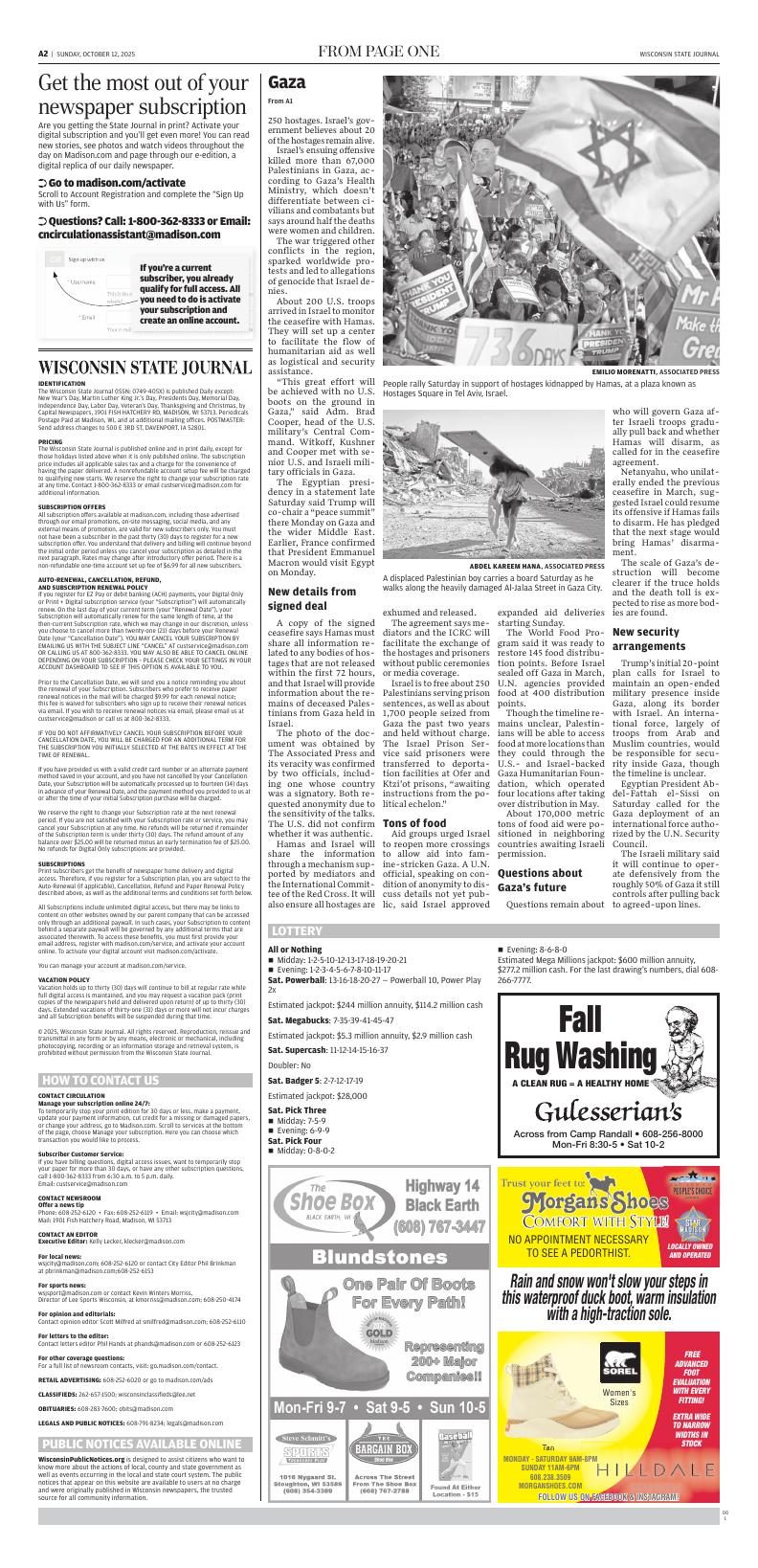
A sign on the southbound side of John Nolen Drive alerts drivers
to the start Monday of a nearly two-year reconstruction of the
causeway. The city has not designated any official detours, but
planners urged drivers to find alternate routes or allow more time
for their daily commutes.
John Hart / JOHN HART, STATE JOURNAL
About $33 million is coming from the federal government, with the rest of the reconstruction paid for by the city, said Aaron Canton, a city engineer.
“The biggest driver is replacement of the bridges on the causeway,” Canton said. “They’re nearing the end of their service life. They need to get replaced.”
Related stories
The three bridges on the southbound side of John Nolen Drive were built in the 1960s, and the three bridges on the northbound side were added in 1975, said Tom Mohr, Madison’s assistant director of traffic engineering. The causeway was reconstructed in the 1990s, but the bridges were not replaced, he said.
“The causeway is artificial, filled-in land,” Canton said. “It’s settled over time. The settlement of the land has impacted the structural integrity of the bridges, so that sliding has deteriorated them maybe a little more quickly than we’d hoped for.”
![]()
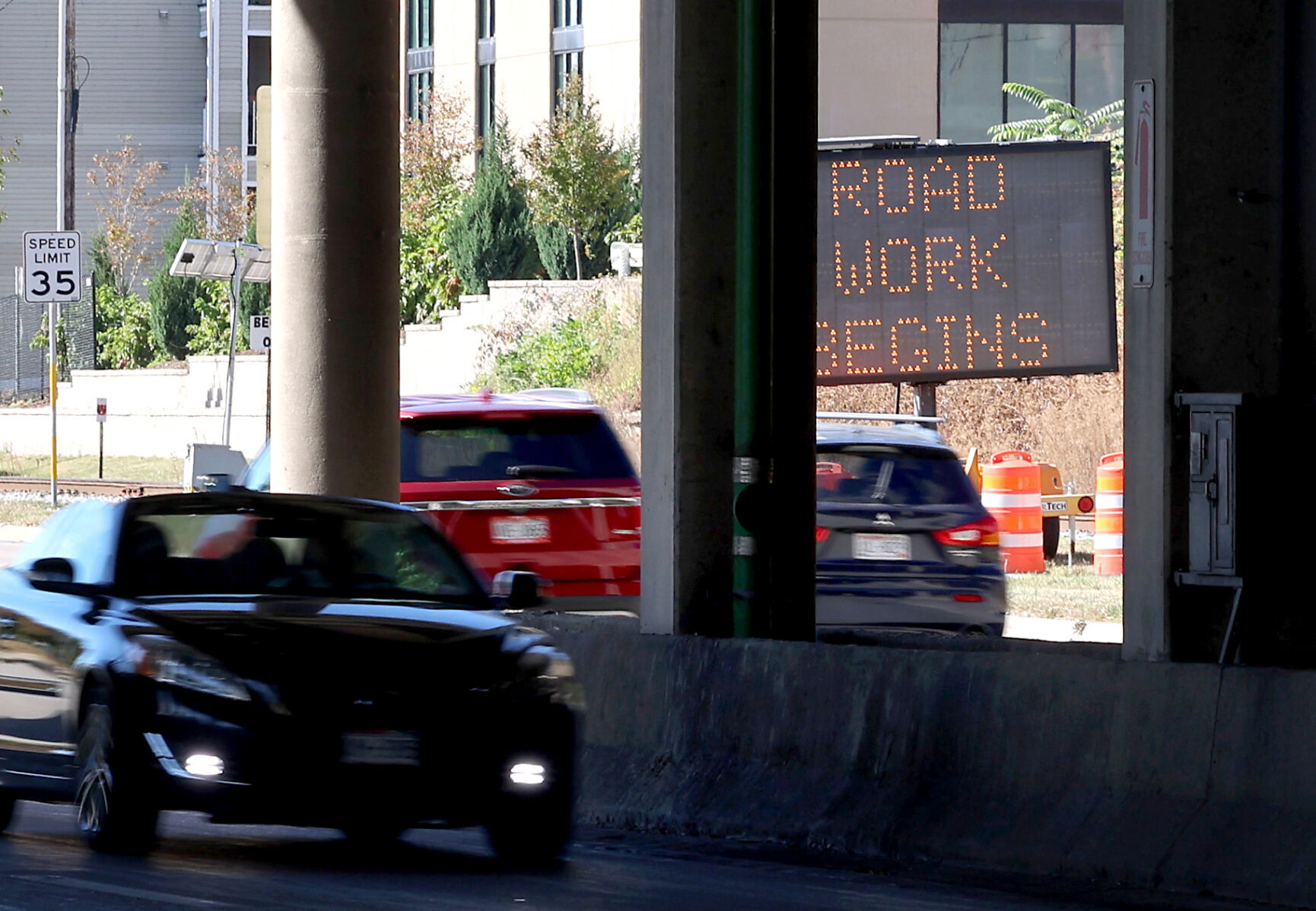
Traffic moves north at the intersection of John Nolen Drive and
East Lakeside Street, the southern end of the upcoming
reconstruction. Drivers can expect delays starting this month as
the causeway is reduced from two lanes in each direction to
one.
John Hart / JOHN HART, STATE JOURNAL
The three new bridges will support separate bike and pedestrian paths, while the reconstructed roadway will result in narrower traffic lanes to reduce traffic speeds. And the North Shore Drive and South Broom Street intersections will be made more compact, shortening and simplifying the crosswalks.
Work will start on the causeway’s southbound side through the middle of next summer. The northbound side – which includes the Capital City Trail – will be reconstructed after the southbound side is complete.
Here’s what you need to know about the project.
![]()
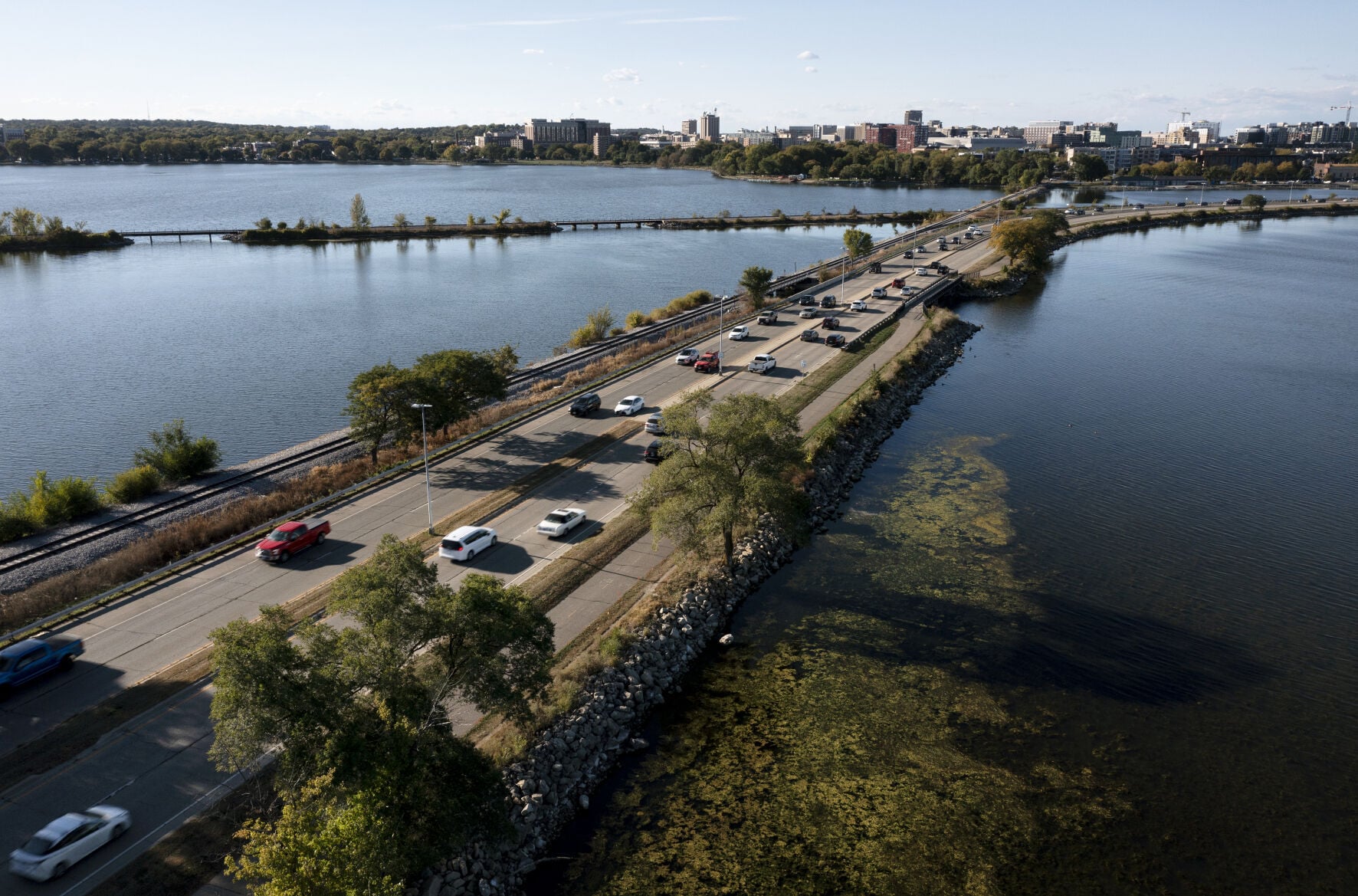
Afternoon traffic crosses Lake Monona on John Nolen Drive.
Starting Monday, crews will begin an ambitious two-year project to
rebuild the causeway, including replacing six bridges and building
three new ones for bikes and pedestrians. Traffic on the causeway
will be reduced to one lane in each direction during
construction.
Amber Arnold / AMBER ARNOLD, STATE JOURNAL
What’s happening when?
The city expects work on the thoroughfare connecting the Beltline to Downtown to last until fall 2029. Thankfully, the work will be broken down into three phases, meaning stretches of the road won’t be under construction the entire time.
The first phase is the largest of the three, with work between Lakeside and Broom Streets. That phase is broken down into four stages, although with projects this large and Wisconsin weather as fickle as it is, city engineers can’t promise these dates will be strictly adhered to.
Stage 1 (October-November 2025): The first stage of the first phase is the smallest, as crews lay the groundwork for construction. North- and southbound lanes on John Nolen Drive will remain but are reduced to a single lane in either direction. The speed limit will be reduced to 25 mph. Traffic will be rerouted between 7 p.m. and 6 a.m. for overnight construction on the road’s storm sewage system, with northbound traffic detoured to Olin Avenue, and southbound traffic detoured to North Shore Drive.
Stage 2 (November 2025-August 2026): Drivers will be unable to turn left onto John Nolen Drive from Broom Street. North Shore Drive and Broom Street will be closed periodically to all traffic for work on the railway lines. The closures will be staggered and last up to 60 days.
Stage 3 (August 2026-June 2027): All traffic will shift to the southbound lanes, with one lane in each direction, as construction begins on the northbound side of John Nolen Drive. The Capital City Trail between Lakeside and Broom Street will be closed to pedestrians and cyclists, with a recommended detour around the west side of Monona Bay.
Stage 4 (June 2027-July 2027): One lane in both the north- and southbound sides will be open to traffic during resurfacing. The Capital City Trail will reopen, and the North Shore Drive and Broom Street intersections will reopen to all traffic with no restrictions.
![]()
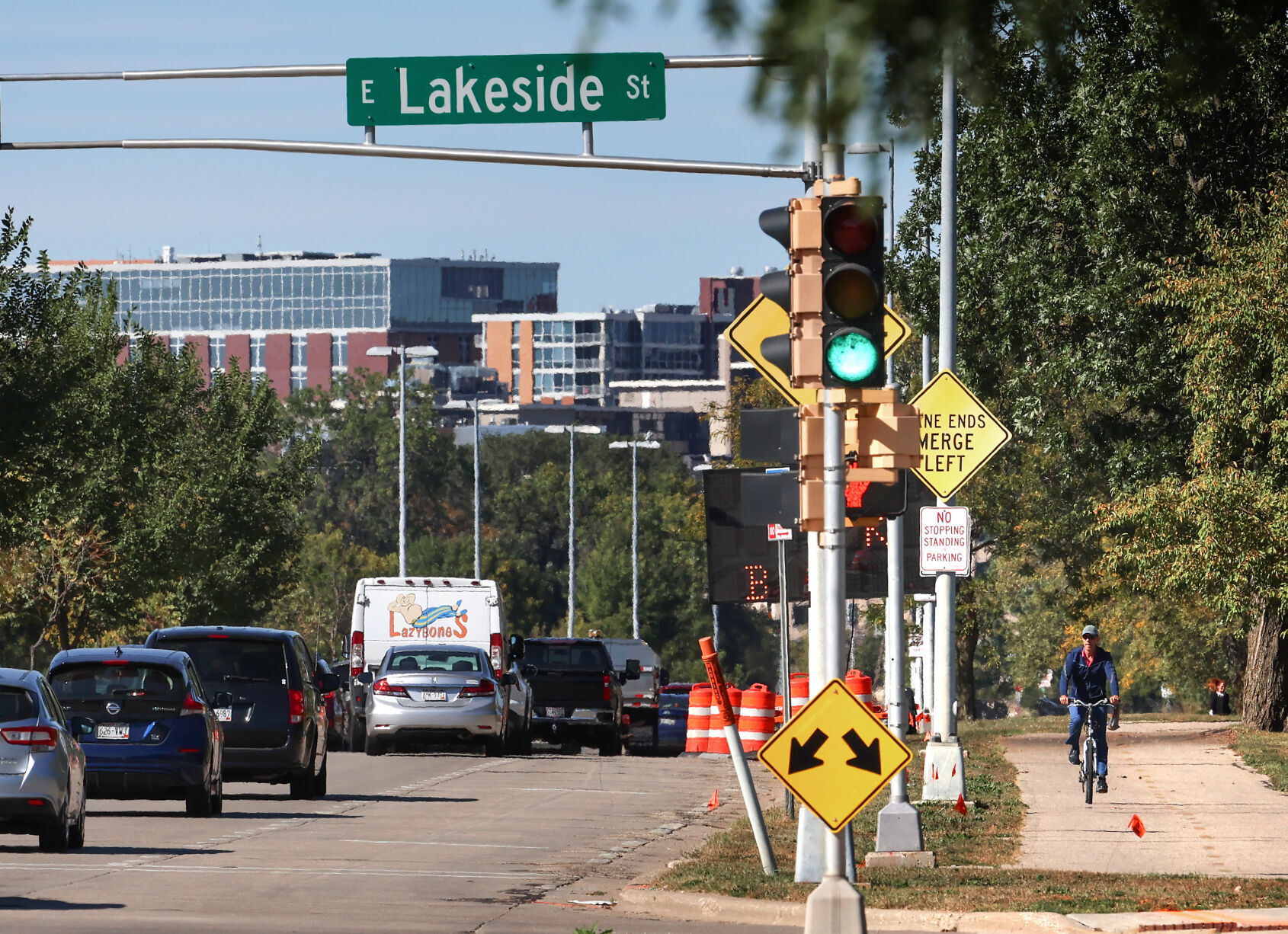
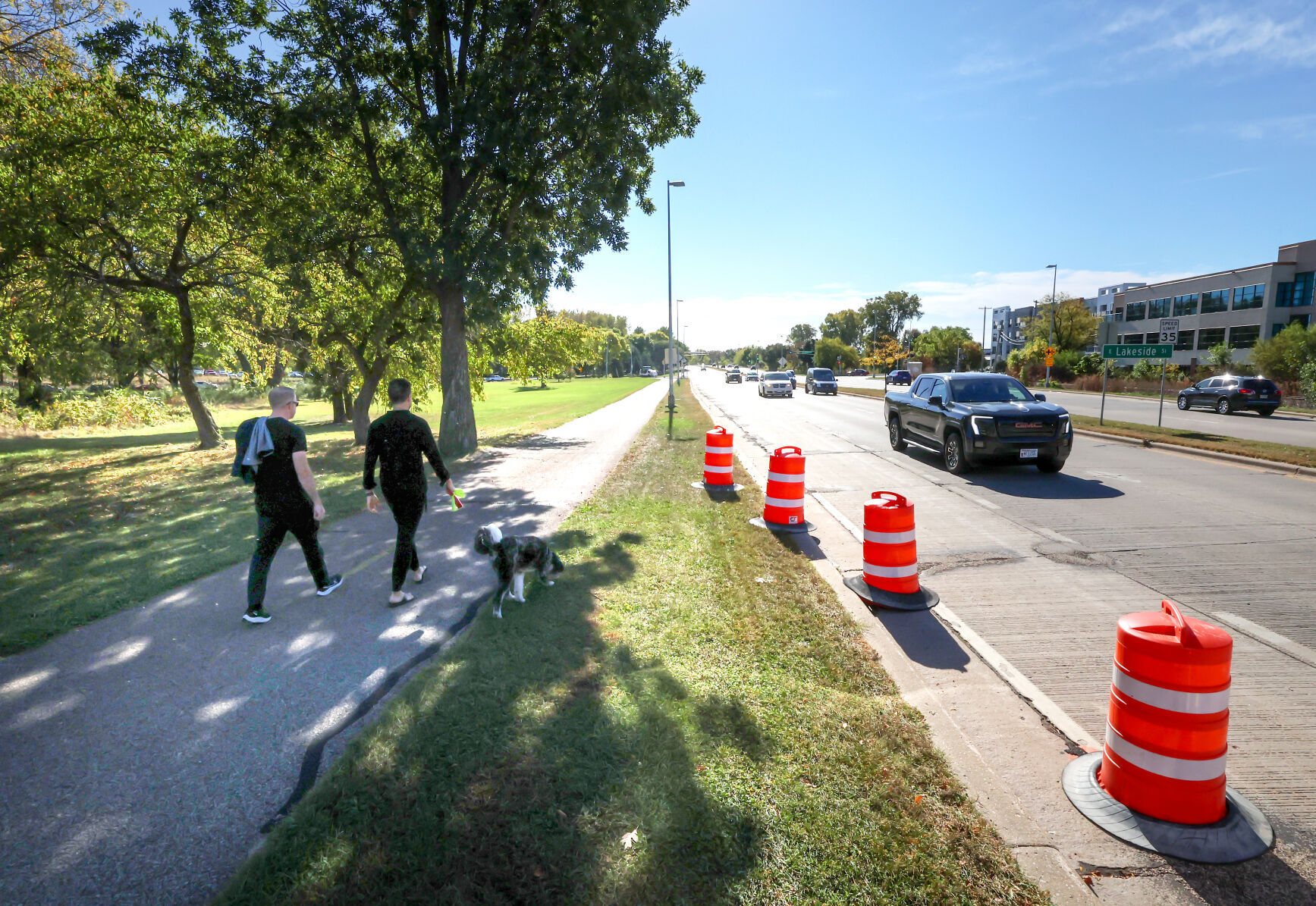
Traffic barrels herald the start of construction on John Nolen
Drive. The first phase will extend from South Broom Street to East
Lakeside Street, in the distance above.
John Hart / JOHN HART, STATE JOURNAL
How should drivers prepare?
Motorists who use John Nolen Drive to get to and from Downtown can expect delays and should look for alternate routes. The city has not designated any official detours.
For drivers coming from the North and East sides, East Washington Avenue remains the most direct route into Downtown.
If you’re coming from the West or South sides, instead of taking the Beltline around to John Nolen, it’s probably better to take the Midvale Boulevard or Park Street exit, or skip the Beltline altogether and take Old Sauk Road or University Avenue through town.
“A portion is going to have to go another way,” Mohr said. “It’s really just up to every person to figure out what works best for them based on where they are, where they’re going.”
A preliminary traffic study by the city’s Engineering Division projects delays of up to seven minutes for northbound traffic on John Nolen Drive and 13-minute delays for southbound traffic.
“If you just change your time going to work by 15 minutes, that could
have a huge effect on the delay that you see,” Mohr said.
City engineers strongly discourage drivers using the Beltline from exiting on John Nolen Drive and cutting across to Park Street just before hitting the construction zone via Olin Avenue or Lakeside Street, two largely residential streets.
“If you’re looking for an alternative route, especially coming from the south, look for a different Beltline exit,” city engineer Aaron Canton said.
Beginning Monday, Oct. 13, drivers will be unable to turn left onto John Nolen Drive from Broom Street for the duration of the reconstruction. And in the summer, drivers will be unable to turn left onto North Shore Drive from John Nolen Drive.
![]()
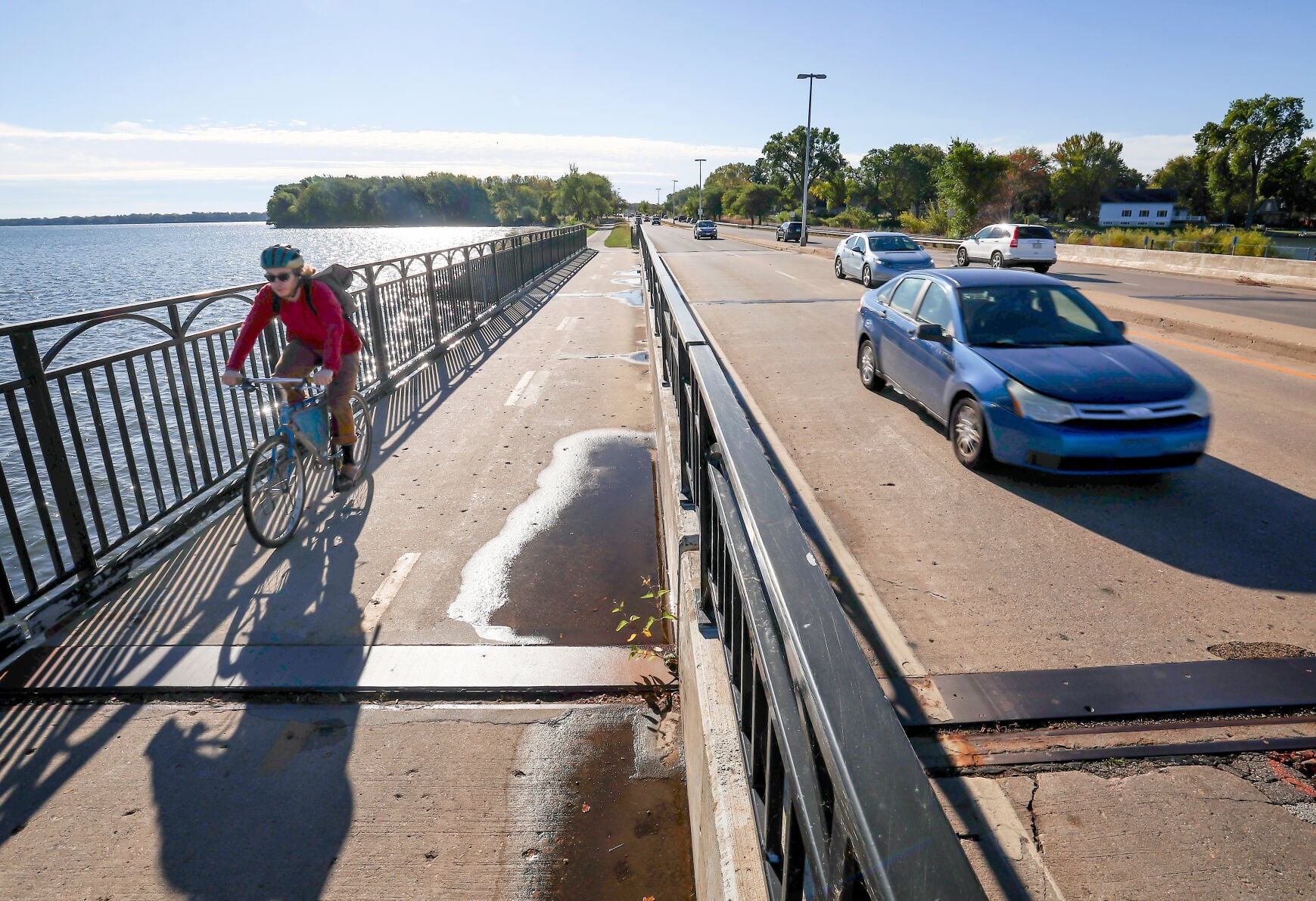
About 48,000 vehicles drive on John Nolen Drive every day, and
about 4,500 people use the adjacent path. Travel lanes will be
reduced this month and the path closed starting next year for
reconstruction of the causeway, which is expected to be complete in
the summer of 2027.
John Hart / JOHN HART, STATE JOURNAL
What about cyclists?
Motorists aren’t the only ones about to have their travel plans interrupted. The portion of the Capital City Trail that runs along the causeway will also be closed for part of the reconstruction.
The good news: Cyclists can continue using the causeway for another year. But starting next August, cyclists, joggers and pedestrians will need to detour around Monona Bay, adding about two miles to their trip.
It’s all so crews can replace the existing bridges and build three additional bridges to support separate paths for bikes and pedestrians, farther from the roar and tumult of John Nolen Drive.
The new paths should open sometime in the summer of 2027.
How do I get across John Nolen on foot?
Pedestrians will need to take different, and in some cases longer, routes to cross John Nolen while construction is underway starting next summer.
The intersections at North Shore Drive and South Broom Street will each be closed to pedestrians for railway construction beginning in the summer. Work
on each intersection will be staggered, with closures lasting up to 60 days, according to city engineers.
![]()
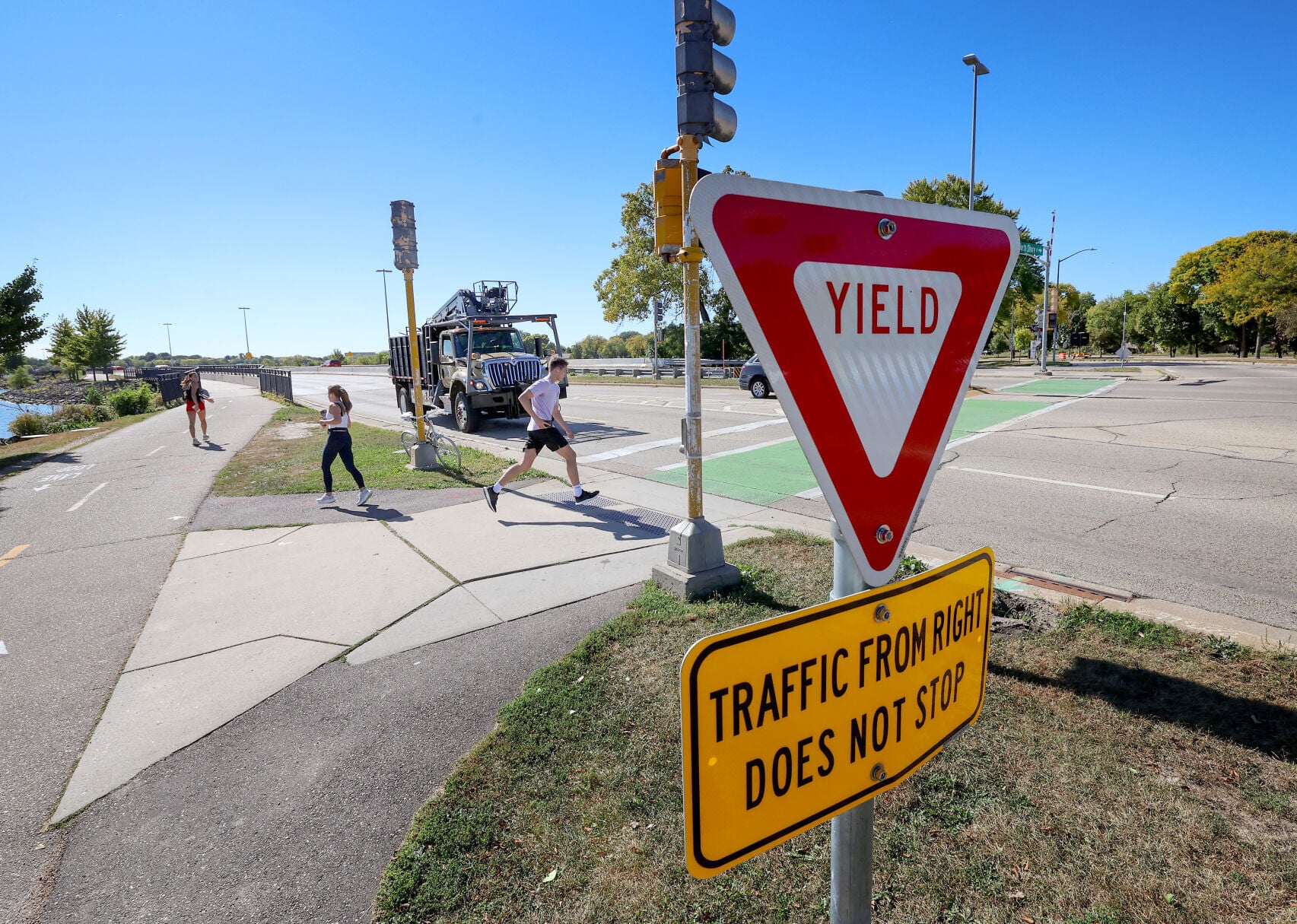
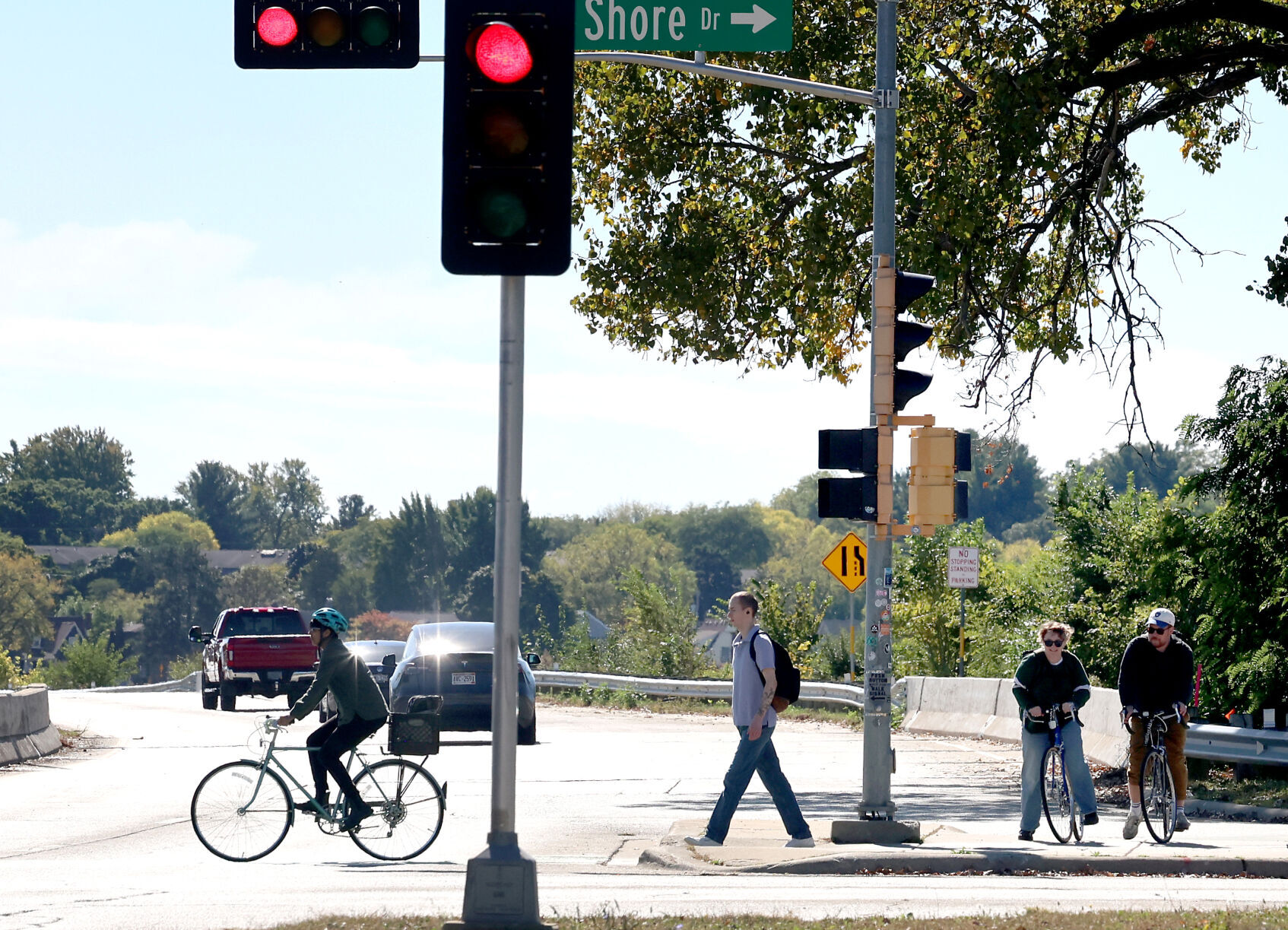
Pedestrians cross John Nolen Drive at the intersection of North
Shore Drive. When the reconstruction is finished, the North Shore
Drive and South Broom Street intersections will be more compact,
with shorter and more simplified crosswalks.
JOHN HART, STATE JOURNAL
Pedestrians crossing from the Capital City Trail will be detoured along North Shore Drive and onto West Wilson Street.
A new pathway along Brittingham Park will connect the Southwest Path off North Shore Drive to West Wilson Street to shorten the walking distance around the construction.
Can I still get from the bay to the lake by boat?
Even though all six bridges dividing Lake Monona from Monona Bay are being replaced and three new bridges for pedestrians and cyclists are going up, boaters who pass under those bridges are unlikely to see major disruptions, according to city engineers.
A channel for boats to cross from the bay to the lake will be maintained in the center of the bridges, Canton said.
To further ease boaters’ burden, a majority of the bridge work will be completed during the winter, when the only boats likely to be on the lake are ice boats.
![]()
The Capital City Trail, above, will remain accessible to bikes
and pedestrians until sometime next summer, when work on the
northbound side of the causeway will result in closing the path and
directing users around Monona Bay.
John Hart / JOHN HART, STATE JOURNAL
Winter road construction is unusual in the Midwest, where the cold, snow and ice can slow working crews. But the Wisconsin Department of Natural Resources required the bridge work be done in the colder months to minimize environmental impacts, Canton said.
Crews will first set up coffer dams around the bridges to create dry zones as they lay concrete and steel.
Each of the six roadway bridges will cost on average $2.3 million, and the new pathway bridges will cost about $1.7 million each, according to Canton.
Will bus travel be affected?
The only Metro Transit bus route that runs on John Nolen Drive will maintain its regular path and schedule after traffic is reduced to a single lane in each direction.
Route 65 — which runs from downtown Fitchburg to the UW Health campus — will not be affected outside of potentially small detours around work zones, Metro Transit Chief Development Officer Mick Rusch told the State Journal.
“If for some reason things got to the point we couldn’t operate buses in a timely way through the reduced lanes of traffic, then we’d probably have to operate on Park Street, which would bypass Broom and Bassett,” Rusch said. “But, right now, we’re planning to travel on John Nolen and see how well we can maintain our schedules.”
![]()
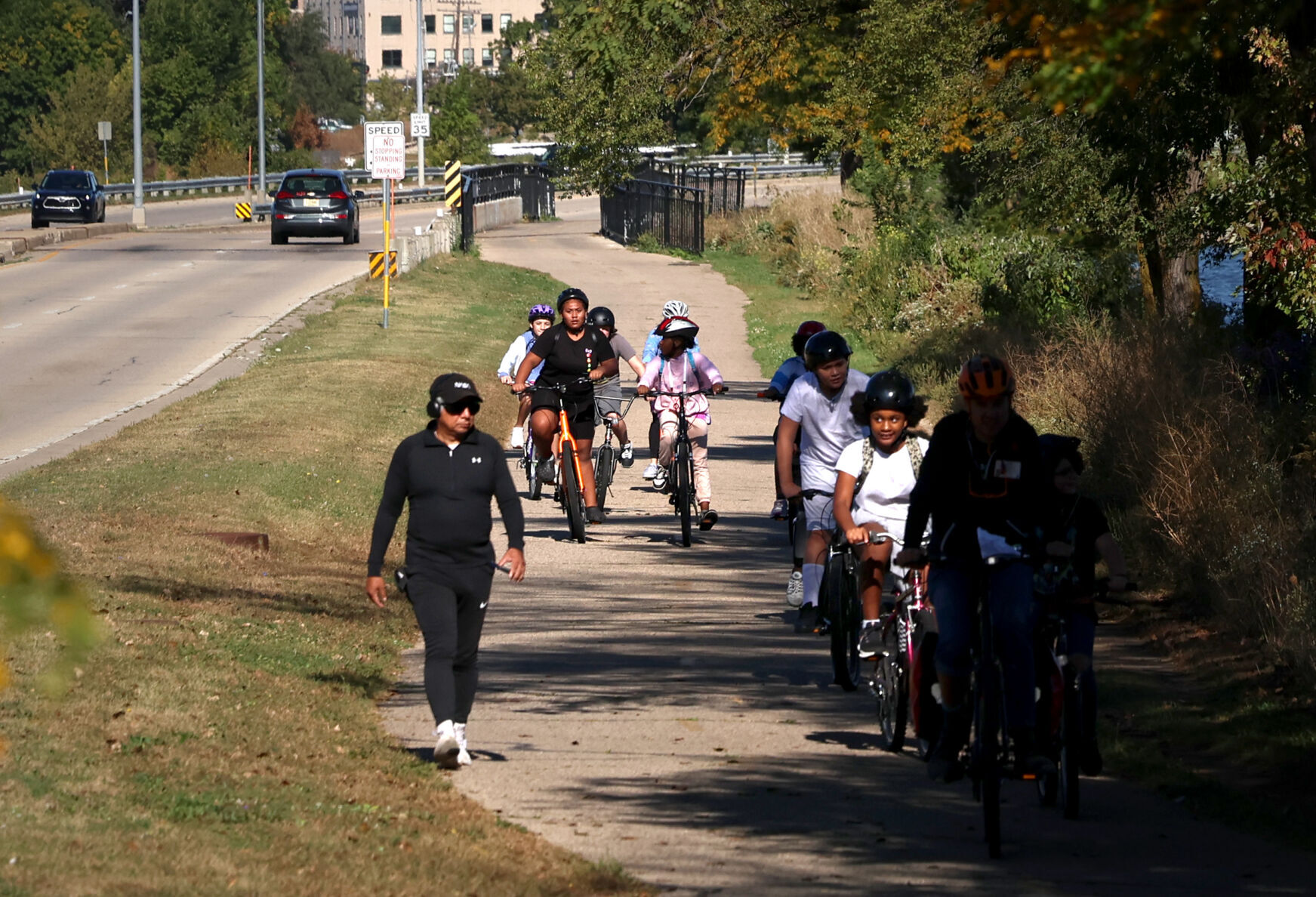
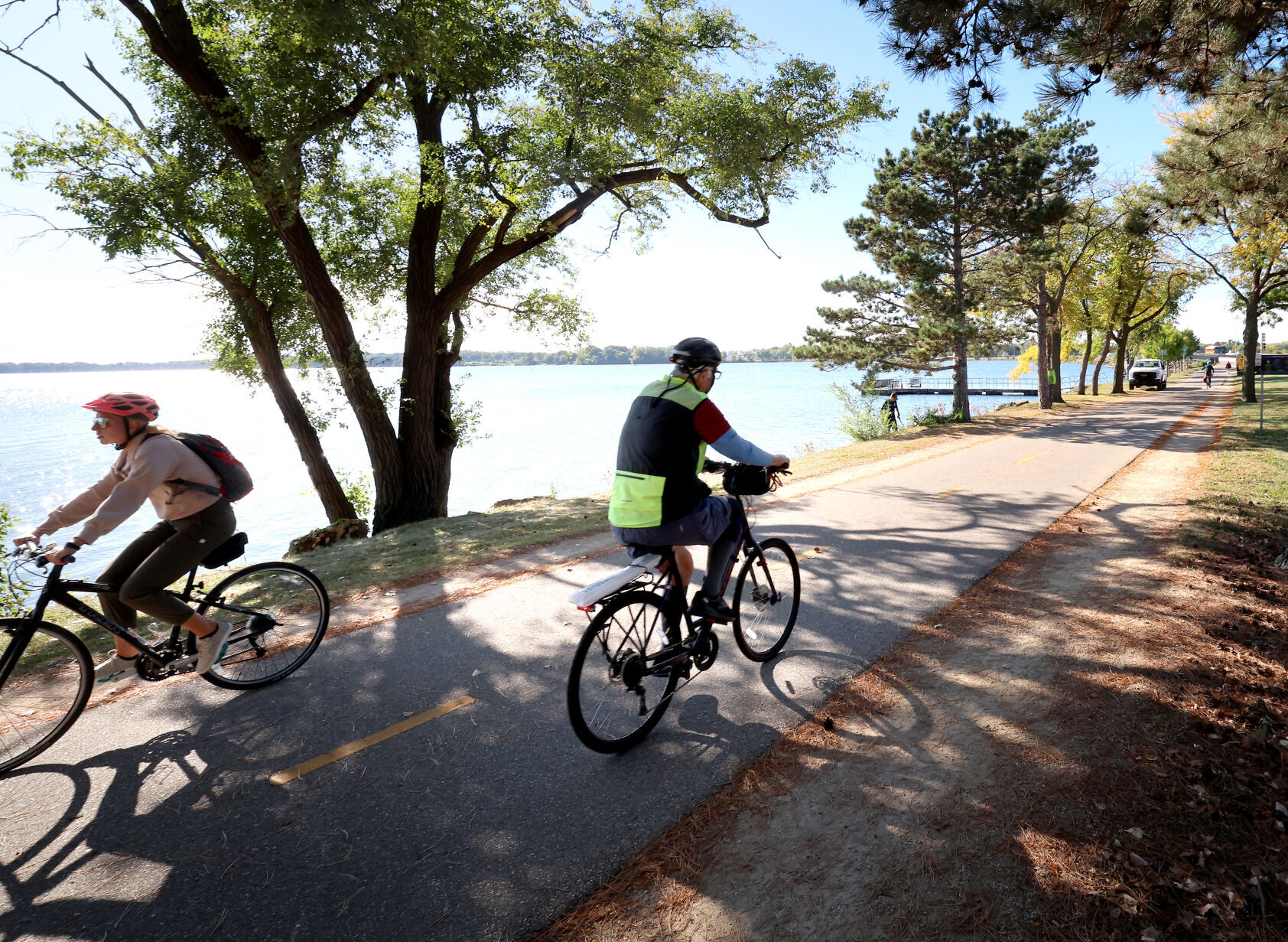
Bicyclists ride on the Capital City Trail along John Nolen
Drive. The trail is open for now but will close starting next
summer while the causeway — and the adjacent path — is
reconstructed.
John Hart / JOHN HART, STATE JOURNAL
How does this mesh with Lake Monona shoreline plans?
Work on the Madison LakeWay project, an ambitious plan to reinvent 1.7 miles of the Lake Monona waterfront over decades, is expected to begin in 2027 as the first phase of the reconstruction of John Nolen Drive winds down.
After the reconstruction and the addition of separate bike and pedestrian paths, the $12 million first phase of the Madison LakeWay project calls for adding boardwalks and open space and increasing pedestrian access to the lake.
Elements of the LakeWay project, which aims to create more parkland and recreation opportunities along the waterfront through a series of phased improvements, were proposed in the early 1900s by John Nolen himself. The master plan for the project was developed by Denver-based design firm Sasaki through a city design competition and adopted by the City Council last year.
![]()
Pedestrians cross at the intersection of John Nolen Drive and
North Shore Drive. The city designed changes to the North Shore and
South Broom Street intersections to accommodate a bike and
pedestrian underpass, but it currently has no plans to build
one.
John Hart / JOHN HART, STATE JOURNAL
The city will plant trees along John Nolen Drive after construction, taking steps to keep the new trees healthier than the ones there today. The LakeWay project will add native perennials along the causeway in coordination with the city.
OK, but then that’ll be it, right?
Not exactly.
The overhaul of John Nolen Drive between South Broom Street and East Lakeside Street is the first and most extensive of three planned phases to remake the Madison artery.
In the coming years, more reconstruction will extend all the way to the Beltline.
A second phase of reconstruction will extend from East Lakeside Street to East Olin Avenue. That phase is currently in design, with work tentatively scheduled to start in 2028.
An eventual third phase will complete the reconstruction from East Olin Avenue to the Beltline.